
Returning to the Land: What My Body Remembered Before I Had Language
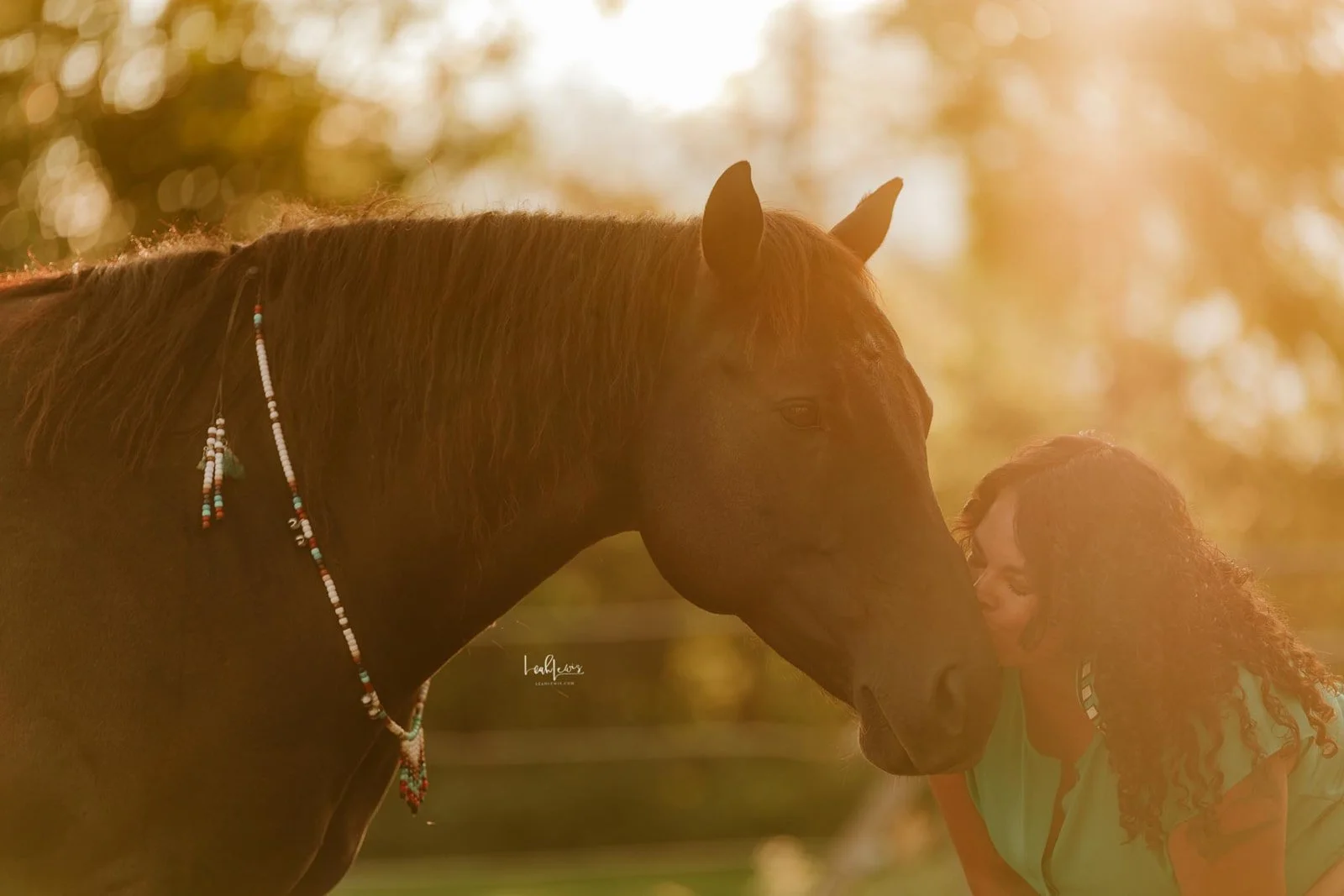
I did not grow up thinking land belonged to me.
Land felt distant. Complicated. Charged.
Something I was drawn to — and quietly warned away from.
As a Black, Native, multi-race woman, I absorbed early messages about what was “ours” and what was not. Being country. Loving animals. Feeling most regulated outside, in dirt and weather and quiet — these things were often coded as white, backward, or naïve. Urban sharpness was prized. Intellectual fluency mattered. Distance from the land felt safer.
And yet, my body never fully agreed.
There was always a pull — toward animals, toward open space, toward rhythms slower than productivity. A longing I didn’t yet trust. One I learned to downplay, then explain away, then finally… listen to.
What I didn’t know then
What I didn’t understand growing up is that this disconnect wasn’t personal — it was historical.
For generations, Black and Indigenous people were pushed off land through violence, policy, and theft. Land ownership meant autonomy, safety, and power — and that made it dangerous. Migration to cities wasn’t simply about opportunity; it was often about survival.
Over time, rural Black life was erased or rebranded as something that was never ours. Loving land became complicated. Animals became symbols of labor, domination, or loss rather than relationship. What had once been ordinary — tending, growing, listening — became emotionally loaded.
So when younger generations learned to associate Black culture with cities and distance themselves from “country” identities, it wasn’t betrayal.
It was adaptation.
But adaptation has a cost.
Land was never neutral for me
As a child, going into rural or “country” spaces wasn’t peaceful — it was risky.
Silence didn’t feel calming. It felt exposed.
Isolation didn’t feel spacious. It felt unsafe.
There were fewer witnesses. Fewer exits. More unspoken rules about who belonged and who didn’t.
As a mixed-race person, I often moved through spaces where people didn’t immediately read me as Black. Sometimes they assumed I was Latinx or something else. And in those moments, guards would drop.
Then the truth would come out.
Anti-Blackness.
Racial jokes.
Dog whistles.
Casual beliefs about who deserves land, safety, dignity — and who doesn’t. Over the years it stopped coming overtly but in a more covert way. I’d be left wondering if I had really just heard what I just heard, even from supposed well meaning friends.
I would suddenly be standing in moments I didn’t choose, holding an impossible decision:
Do I speak up and risk my safety or belonging?
Or do I go quiet and carry it alone?
This wasn’t rare.
It was formative.
It taught my body something very specific:
belonging could be revoked at any moment.
When parts of me protected other parts
For a long time, different parts of my identity shielded one another.
My ambiguity protected my Blackness — until it didn’t.
My queerness offered belonging — until it conflicted with racial safety.
My Native identity lived quietly, often without language or permission.
This wasn’t confusion.
It was survival.
It wasn’t until I got older that I began to feel more rooted — less willing to trade one part of myself for access to another. Less willing to accept conditional safety as the price of entry.
The body remembers what the story forgets
Even when land is taken, memory remains — not always as words, but as sensation.
I didn’t “decide” to reconnect to land.
My nervous system led the way.
Animals became mirrors I couldn’t ignore.
Horses, especially, asked something different of me — not performance, not mastery, not explanation. Just presence. Attunement. Honesty.
Being with them surfaced grief I didn’t know I carried:
Grief for land never inherited
Grief for ways of living interrupted
Grief for relationships with animals that were once reciprocal, not extractive
And alongside that grief came relief.
A sense of coming home to something that had been waiting.
Why land and animals feel so charged now
Reconnecting to land is not neutral for many of us.
It brings up:
Longing and fear
Permission and guilt
Belonging and historical rupture
Land-based healing can feel emotional, spiritual, or destabilizing because it touches unfinished relationships — with place, with ancestry, with the body itself.
Animals intensify this because they regulate without domination. They respond to presence, not performance. They don’t require us to explain ourselves.
For bodies shaped by vigilance, that kind of relationship can feel both soothing and unfamiliar.
Sometimes even unsafe.
And yet, deeply right.
Grief is not the problem — it’s the doorway
As I rooted more deeply into land and animals, my grief clarified.
This wasn’t abstract sadness.
It was historical grief.
Land theft didn’t just remove acres.
It removed food sovereignty.
It removed safety.
It removed the ability to opt out of systems designed to exploit us.
That loss lives in bodies.
So my longing for land was never romantic.
It was reparative.
This isn’t about going backward
Reconnecting to land is not nostalgia.
It’s not reenactment.
It’s not pretending harm didn’t happen.
It’s remembering forward.
It’s allowing the body to reclaim rhythms that capitalism, colonization, and racialized trauma disrupted — movement, rest, relationship, reciprocity.
For me, this reconnection isn’t about ownership for its own sake.
It’s about belonging without permission.
And yes — it’s also about survival.
Learning to grow food.
Tending land.
Living in relationship with animals.
Reducing dependence on systems that have historically targeted my people.
For Black and Native lineages, self-sustainability is not a trend.
It is a response to theft.
Why my resistance began long ago
In this political moment, many non-Black friends are mobilizing urgently — protesting, striking, acting as if this is unprecedented.
My body doesn’t experience it that way.
Criminalization.
Scapegoating.
Policies deciding who belongs.
This is familiar terrain.
So my resistance took a different form — years ago.
I began leaving spaces that required me to fragment myself.
I began rooting into land, animals, seasons, and rest.
I began choosing regulation over urgency.
This was not disengagement.
It was preservation.
What this means for my work — and my life
I want to be clear: I am deeply committed to justice for all bodies.
That commitment lives in how I tend my nervous system, my land, my animals, and my capacity to remain present without hardening or burning out.
Justice does not only live in protest.
It lives in regulated bodies, in sustainability, in ways of living that do not replicate the very harm we are trying to end.
My work with land and horses is not an escape from justice.
It is how I ensure my care ripples outward rather than collapsing inward.
Rooted resistance
I am a therapist because I understand bodies.
I am an equestrian because I trust relational intelligence.
I am a land steward and farmer because land theft shaped my lineage — and reclaiming relationship to land is survival.
My protest is preservation.
My healing is historical.
My way of showing up is intentional, rooted, and deeply political.
And it always has been.
An invitation
If land-based or animal-centered spaces feel strangely emotional to you — if they bring tears, resistance, longing, or relief — you’re not broken.
You’re remembering.
And remembering is not a weakness.
It’s a form of resilience.