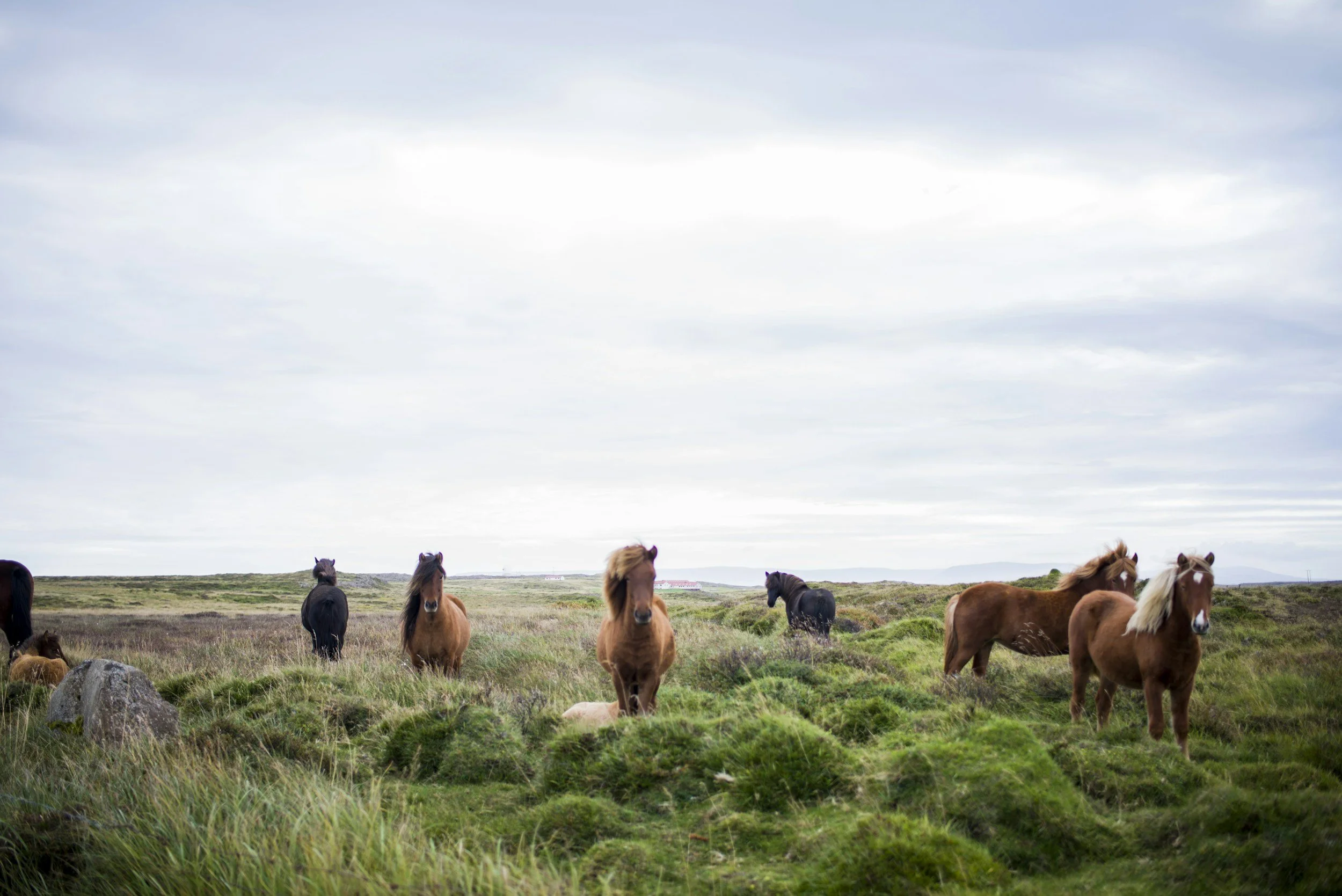
The Language Between
A relational and somatic learning program for horse–human relationships
Registration Begins April 1 program Begins May 1
Listen to the Relationship
Not the rush.
Not the rules.
Not the pressure to get it right.
The Language Between is a foundational learning experience for people who sense that something meaningful happens in the moments before we act with horses — and who want to learn how to stay there longer.
This program invites you to listen:
to your body
to the horse
to what is unfolding between you
When force doesn’t feel right — but you’re not sure what comes next — this work offers another way.
Why This Work Exists
Many of us were taught to focus on outcomes with horses:
getting the behavior, managing the situation, keeping things under control.
Over time, that way of relating can leave both humans and horses feeling overridden — even when everything looks “fine.”
The Language Between grew out of years of teaching Equine-Facilitated Psychotherapy, decades of somatic therapy practice, and lived relationship with horses. It centers the relational and embodied foundations beneath all of that work.
Rather than teaching techniques, this program cultivates relational literacy, embodied discernment, and ethical responsiveness in everyday interactions.
What This Work Often Opens
Participants often notice:
less urgency and escalation
clearer boundaries — internally and relationally
greater sensitivity to timing and capacity
more cooperation without force
increased trust, over time
No outcomes are promised.
But many people find that when they stop trying to control the relationship, the relationship begins to respond.
Who This Program Is For
This program is intentionally designed for mixed experience levels.
It’s for you if you are:
new to horses and wanting relationship without domination
an equine professional, therapist, or practitioner seeking deeper alignment
questioning dominance-based approaches
curious about consent, power, and embodiment
drawn to somatic awareness but unsure where to begin
You don’t need prior somatic training or advanced horse skills.
Depth comes from how you engage, not what you already know.
The Orientation of This Work
This program rests on a few core beliefs:
Relationship is not an outcome — it is a field we participate in
Consent is ongoing, contextual, and relational
The body is a source of information, not something to override
Restraint and forced compliance are not neutral — they carry relational and nervous-system costs
Trust, attunement, and responsiveness change what becomes necessary
As relationship deepens, many forms of force become less central — not because tools disappear, but because coercion no longer carries the interaction.
What You’ll Learn
You’ll learn how to:
notice what you bring into relationship before acting
make requests without demand
pause long enough to receive information
discern between not now, not like this, and no
respond without escalation or collapse
recognize how conditions shape communication
stay present with uncertainty — somatically and relationally
This is slow work.
And it is practical.
The Three Guiding Maps
Two simple frameworks ground the entire program.
The Relational Field Map
(Human • Horse • Conditions)
Helps you see what is shaping the relationship — without blame or diagnosis.
The Relational Request Map
(Request → Pause → Response → Discern → Choose)
Supports consent in action and discernment over force.
The Participation Spectrum Map
(Constraint ↔ Participation)
What level of participation is possible within these conditions?
These maps are not techniques.
They are ways of orienting attention.
Somatic Inquiry: The Method
Somatic awareness is woven throughout the program.
This is not about calming down or regulating sensation away.
It is about:
noticing impulse before reaction
sensing thresholds before crossing them
recognizing when the body wants to hurry or override
letting sensation inform relational choice
Somatic inquiry helps you listen more honestly — to yourself and to the horse.
While The Language Between is not therapy, the work is inherently reciprocal. Learning to listen somatically—to your own body and to the horse—changes the quality of relationship for both beings.
As humans slow down, notice impulse, and respond with greater attunement, horses often experience more clarity, choice, and ease. At the same time, humans find that practicing embodied awareness within relationship can be settling, grounding, and supportive of their own nervous systems.
This is not treatment. It is mutual regulation through relationship—where presence itself becomes restorative.
Program Structure
3 Online Modules
Relational Field & Context
Requests, Consent, and Discernment
Co-Regulation Without Control
Live Group Sessions
Monthly experiential calls focused on real horse–human relationships (not fixing cases).
A 3-Day Immersion on the Land
A Core Part of the Program
This program includes a required 3-day in-person experiential on my farm in southwest Michigan, among our herd of horses.
This is not an add-on.
It is essential to the learning.
Why the In-Person Matters
Bodies learn through experience.
Consent is lived, not theoretical.
Land and conditions shape relationship.
The immersion allows what’s explored online to settle into the body and into relationship — with horses, land, and one another.
What This Experiential Is
Across three days, we will:
engage in guided somatic inquiry
work with the relational maps in lived moments
explore everyday interactions through consent and discernment
practice waiting, restraint, and ethical response
notice how bodies respond when urgency is removed
No performance.
No fixing.
No agenda to get it right.
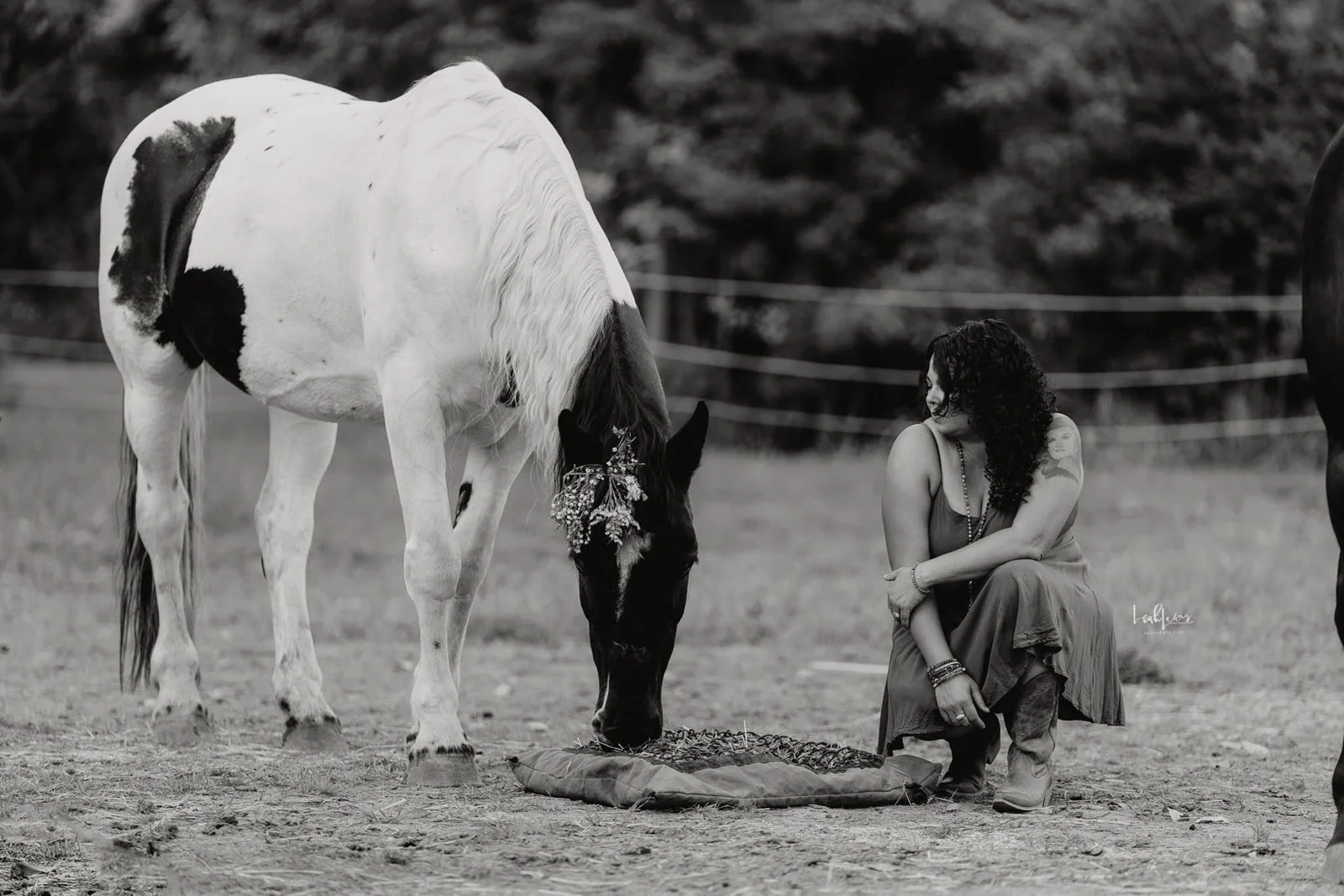
The horses are present as sentient participants — not tools.
What This Is Not
This experiential is not:
therapy or trauma processing
a horse training intensive
riding or skills instruction
focused on fixing behavior
This part of the program is grounded in the same relational, body-based philosophy as the rest of the course.
Practices & Resources
Short somatic audio practices
Guided relational noticing invitations
Printable maps and handouts
Neuroscience context to support discernment
Begins: April 1
Format: Online + live group sessions + 3-day immersion
Recordings available for all live calls
An Important Boundary
The Language Between is not:
therapy
a training or certification
a clinical preparation
It is a foundational relational learning experience that can support — and transform — how you engage across many contexts.
Investment
Founding Cohort Tuition: $1350 For Founding Cohort plus 2 sliding scale slots available
This first offering of The Language Between is being held as a founding cohort and is offered at a reduced rate in recognition of those who are stepping into this work at its beginning.
Tuition includes:
all online modules
live group sessions with experiential and relational inquiry
somatic practices and guided resources
printable relational maps and handouts
neuroscience context to support discernment
the required 3-day in-person immersion on the land
This program is designed as a committed, relational learning container. The tuition reflects live facilitation, small group size, and the depth of embodied, in-person learning that is central to the work.
Payment plans are available.
Future cohorts of The Language Between will be offered at a higher tuition as the program continues to evolve.
If you notice a strong response to the cost, you’re invited to pause and listen to what arises before deciding. Honoring timing and capacity is part of the practice.
**A small number of partial scholarships may be available for the founding cohort. If this program feels aligned but financially out of reach, you’re welcome to reach out.
Enrollment
If you feel drawn to this work, you are welcome here.
Enrollment is open now until June 1.
The program begins June 1.
About the Facilitator
Jennifer A. Baker, LCPC, TCYM-YT
Founder, True Nature Integrative Health
Jennifer brings together over 15 years of experience in psychotherapy, somatic practice, and equine-facilitated work, with a deep commitment to relational ethics, anti-oppressive frameworks, and honoring horses as sentient participants in relationship.
This program reflects the work she lives — on the land, with horses, and in community.