
Can Equine Therapy Be Mutually Beneficial?
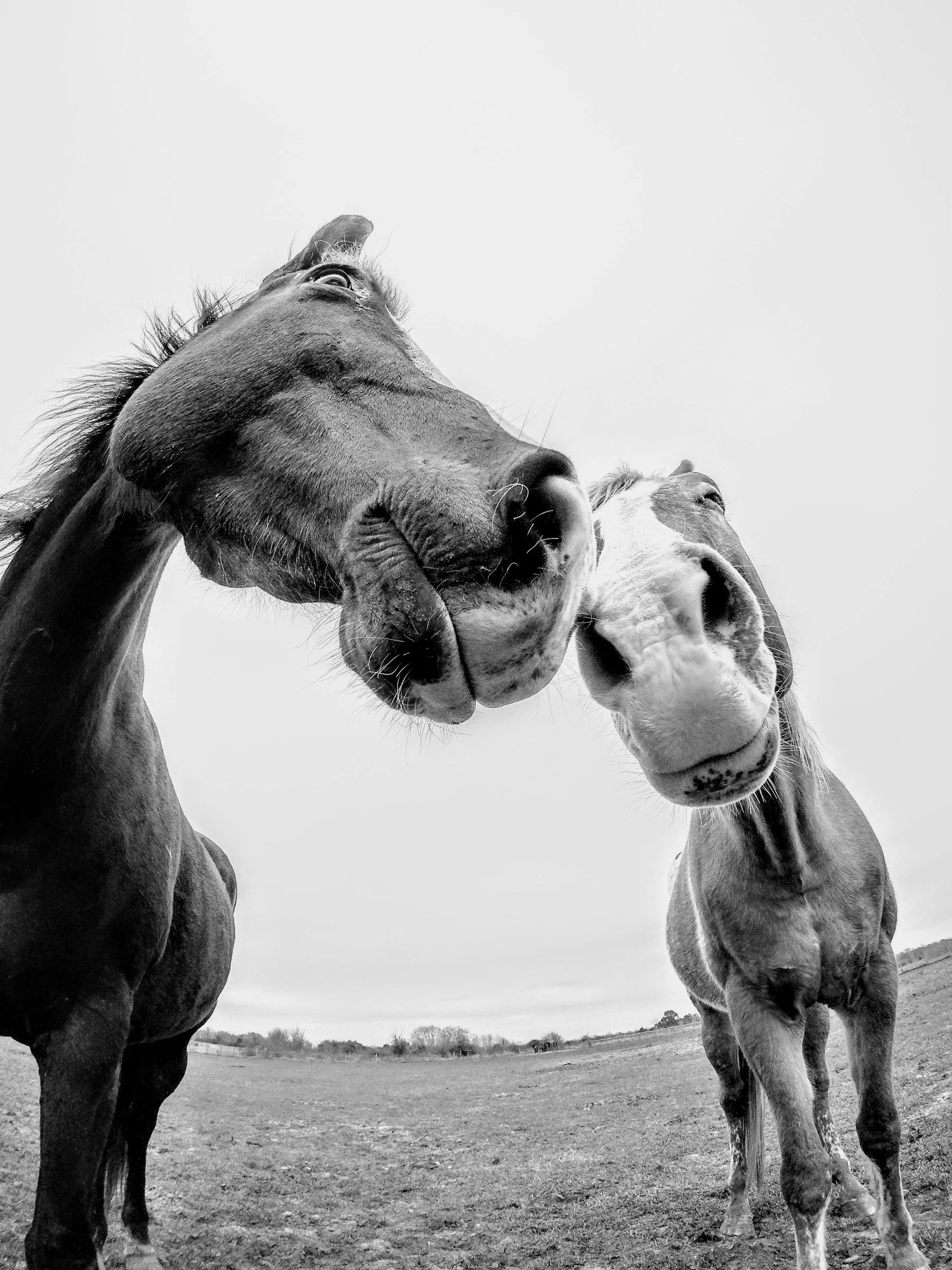
For many years, I have wrestled with a fundamental question about equine-facilitated psychotherapy:
Can an experience created primarily for human healing also benefit the horse?
Anyone inviting animals into therapeutic, educational, or wellness work has a responsibility to ask this question.
Horses do not volunteer to become therapists. They do not choose the systems of domestication into which they are born, who owns them, where they live, or whether humans build programs around their presence.
We cannot erase that power difference by simply calling horses partners. Language is important but at times it feels we are debating the language we use ad nauseum more than we are actually looking at principles and values in practice. Nor can we assume an experience is reciprocal because we love horses, care for them well, or have good intentions.
And yet, I do believe mutually beneficial relationships are possible.
They become possible when we stop treating reciprocity as something automatically provided by the horse’s presence and begin understanding it as something we must continually practice. We also must think about it in relational context not tit for tat.
Mutuality Does Not Mean Perfect Equality
A mutually beneficial relationship does not require pretending that horses and humans occupy equal positions within a human-created system. They do not.
Humans control access to food, land, movement, companionship, medical care, shelter, and many of the conditions of a domesticated horse’s life. In therapeutic programs, humans usually determine when sessions occur, which horses are available, who enters their environment, and what activities may be requested.
Naming this does not make relationship impossible. It makes us more accountable for the relationships we create.
Mutuality means the horse’s experience matters alongside the human experience. The interaction is no longer organized solely around what the client needs, what the practitioner hopes will happen, or what the program wants the horse to provide.
The client’s healing cannot be purchased with the horse’s chronic stress, shutdown, pain, isolation, or loss of choice.
The question shifts from:
How can this horse help this person?
to:
What is happening among this horse, this person, and this environment—and how can we support the wellbeing and participation of everyone involved?
From Compliance to Participation
This distinction is central to The Language Between, my relational and somatic approach to horse-human relationships.
Horses can learn to tolerate a great deal. They can stand still, follow directions, remain close, and complete what is asked while experiencing tension, shutdown, uncertainty, or discomfort.
Stillness is not always regulation.
Obedience is not always participation.
Proximity is not always connection.
Participation has a different quality. It includes engagement, responsiveness, curiosity, movement, and the ability to affect what happens next. A participating horse is not merely present. The horse is part of the conversation.
Instead of asking, “How do I make this horse do what the session requires?” we begin asking:
What is happening here?
What is each body communicating?
What pressure or expectation is present?
What conditions might make a meaningful response possible?
A request becomes an opening in the conversation rather than a command that must produce the desired result. We make the request, pause, observe, discern, and choose what happens next rather than escalating until the horse complies.
The horse’s hesitation, departure, orientation, or refusal becomes information—not behavior that must be overcome.
Choice Depends Upon Conditions
We sometimes speak about giving horses a choice as though removing a halter or opening a gate automatically creates freedom.
But choice is more complicated than the absence of physical restraint.
Does the horse have sufficient space? Can it move away without being followed or pressured? Is there enough time to respond? Is the horse separated from companions? Is it tired, hungry, uncomfortable, in pain, or overwhelmed? Has it learned that declining a request will eventually produce escalating pressure?
Because domestication limits what horses can truly choose, I am cautious about making absolute claims of equine consent. Instead, I focus on creating the conditions necessary for a meaningful response.
We can reduce unnecessary restraint, recognize subtle communication, offer opportunities to disengage, and allow the horse’s response to influence our decisions.
When the horse’s “no,” “not now,” “not this way,” or “I need more space” can actually change what happens next, the relationship becomes more reciprocal.
Relational Ecologies: Widening the Field
No relationship exists by itself.
Each encounter is part of a larger ecology that includes bodies, histories, nervous systems, culture, land, other animals, human expectations, living conditions, and power.
A horse’s experience in a session cannot be separated from the rest of its life.
Does the horse have consistent access to forage, movement, companionship, rest, and appropriate medical care? Does it have relationships that do not require it to provide something for humans? Is every human interaction organized around work, training, or therapeutic usefulness? Does the horse have opportunities to explore, play, make choices, and simply be a horse? A good friend and colleague of mine shared something that stuck with them and now sticks with me to remember and consider, “The horse has a whole other world that has nothing to do with us”. It fits with the idea in The Language Between that asks us to consider the conditions from moment to moment and day to day.a
This is part of the foundation of Relational Ecologies, my emerging framework for relational, somatic, nature-based, culturally responsive practice.
Relational Ecologies asks us to consider the whole field rather than isolating one interaction and calling it healing. A few moments of apparent connection cannot compensate for conditions that routinely deny a horse’s physical, social, or emotional needs.
Likewise, mutual benefit cannot be measured by whether the horse produced a meaningful experience for a client. The horse’s value is not determined by its usefulness.
How Might the Horse Benefit?
We must be cautious about claiming to know precisely what an experience means to a horse. We can observe behavior, physical states, preferences, patterns, and changes over time, but we should not project human stories onto every response.
Still, we can create experiences that may offer horses genuine benefits.
A well-supported horse may experience social engagement, sensory stimulation, movement, exploration, positive attention, grooming, and opportunities to initiate or decline contact. Some horses appear to seek interaction, show curiosity about unfamiliar people, or return voluntarily to particular kinds of engagement.
The important question is not whether human interaction is universally enriching. It is whether this horse, on this day, within these conditions, appears comfortable, interested, and able to participate in this particular encounter.
The answer may change.
A horse who usually seeks contact may need distance today. A horse who enjoys quiet companionship may not want to be surrounded by a group. A horse who willingly participates in one activity may decline another.
Respecting these differences allows the horse to remain an individual rather than becoming “the therapy horse.”
Horses may also benefit when humans learn to become better relational partners. When people recognize subtle equine communication, question pressure, distinguish participation from compliance, and allow the horse’s response to matter, they may begin caring for horses differently outside the therapy session.
The horse benefits not by healing the human, but because the human becomes more capable of relationship.
Reciprocity Is Not Repayment
Reciprocity can easily become confused with exchange: the horse does something difficult for us, and afterward we offer a treat, a massage, a bodywork session, rest, or another reward chosen by the human. We may then describe the interaction as mutually beneficial because both horse and human received something.
But reciprocity is not a matter of keeping score.
If we override a horse’s hesitation, require compliance, and then compensate the horse afterward, the reward does not retroactively create participation. The entire arrangement—including what was required and what counted as repayment—was still determined by the human.
This does not mean that treats, rest, grooming, bodywork, or other forms of care have no value. They may be pleasurable, supportive, or genuinely beneficial. But care should not function as payment for the horse surrendering its boundaries. Nor should we assume that something is rewarding simply because we have decided it ought to be. The horse may not want touch, bodywork, food, or further interaction in that moment.
Reciprocity is better understood as responsiveness within the relationship. It is present when the horse’s communication influences what happens while the encounter is unfolding—not merely in what the horse receives afterward.
Can the horse’s hesitation change the request?
Can discomfort lead us to pause, adapt, or stop?
Can the horse seek distance without being pursued?
Are we attentive to what this particular horse appears to want or need, rather than offering a standardized reward?
There will be times when necessary medical care, safety, or essential handling requires a horse to tolerate something it would not freely choose. We can acknowledge that honestly, minimize distress, support recovery, and work toward greater cooperation in the future. But we do not need to rename an unavoidable use of human authority as reciprocity simply because we offer something pleasant afterward.
Reciprocity is not: “You did this for me, so I will give you that.”
It is an ongoing relational practice in which the horse’s experience matters enough to shape our choices.
Reciprocity Is Not an Exchange
Mutual benefit should not become another transaction in which the horse provides healing and receives food and care in return.
Basic welfare is not payment for therapeutic labor. Horses deserve appropriate care whether or not they participate in sessions and whether or not their presence produces a transformative human experience.
Reciprocity is less about keeping an exchange perfectly balanced and more about remaining responsive to one another.
In a reciprocal relationship, the horse can influence the encounter. The practitioner is prepared to abandon an activity that is not supportive. The client can learn that connection does not require access to another being’s body, attention, or compliance.
Sometimes the most meaningful relational experience may be accepting that the horse does not want to engage.
That moment can teach something essential: relationship is not proven by getting the response we hoped for. It is revealed in how we respond when another being has a different need. So much of this overlaps in horse human-relationship coaching to Relational and somatic therapy and I find myself really working hard to make that more explicit.
A Relationship in Which Neither Disappears
I believe equine-facilitated therapy can benefit both horse and human. But that possibility depends upon our willingness to relinquish some certainty, entitlement, and control.
It requires appropriate living conditions, careful welfare practices, knowledge of equine behavior, attention to pain and stress, opportunities for choice, and a commitment to noticing when our desire for an outcome is overriding what the horse or our client communicates.
It also requires humility. We will not always interpret correctly. We may discover that something we once considered harmless was experienced as pressure. We may need to change our practices as our understanding deepens.
This is not evidence that relational work has failed. It is part of living relationship.
The possibility of mutual benefit emerges when neither participant is required to disappear for the other.
The human does not have to abandon their needs, emotions, or healing.
The horse does not have to surrender its boundaries, communication, or horsehood.
This is where The Language Between and Relational Ecologies meet: not in a horse being used to heal a person, but in multiple living beings affecting one another within a shared world—and in our commitment to creating relationships in which everyone’s experience matters.
This is Part Three of a three-part series exploring trauma-focused equine psychotherapy, the risks of assigning horses the role of healer, and the possibility of reciprocal horse-human relationships.