
When the Horse Is Not the Healer: A Relational Approach to Equine Facilitated Trauma Therapy
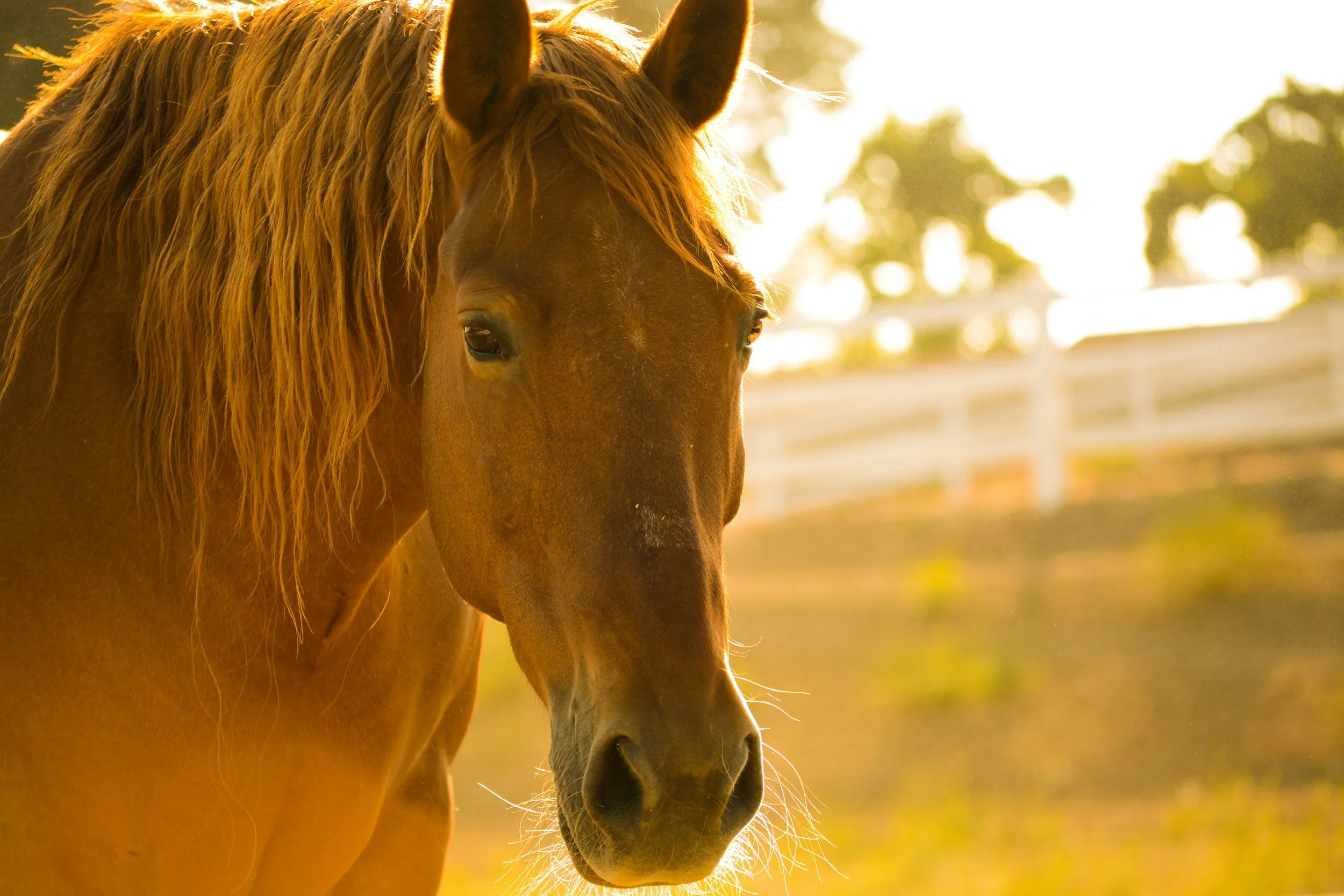
A recent equine-facilitated psychotherapy session brought me back to the heart of this work.
I cannot share the details of another person’s therapeutic experience, but I can speak about what the session illuminated for me as a therapist: trauma healing does not happen because a horse magically removes someone’s pain. It happens as we create conditions in which a person can safely encounter their body, their relational patterns, and new possibilities for choice—while respecting the horse as a sentient participant in the process.
My approach brings together more than twenty years of clinical practice with somatic therapy, nervous-system awareness, nature-based work, cultural responsiveness, and lived relationship with horses. It is grounded in a simple but demanding principle:
Neither the client nor the horse should have to disappear for therapeutic work to occur.
We Begin by Slowing Down
Trauma frequently teaches people to move away from themselves.
A person may learn to monitor other people’s needs, anticipate danger, disconnect from physical sensations, perform competence, become agreeable, or push through discomfort. These are not character flaws. They are intelligent adaptations that may once have protected connection, belonging, or survival.
Because trauma so often involves the loss of choice, I do not begin by giving a client a task to complete with a horse.
We begin by arriving.
We may orient to the land, notice the weather, listen to the sounds around us, feel our feet on the ground, or observe the herd from a distance. I may invite the client to notice their breath, posture, sensations, impulses, or places of tension and ease.
There is no requirement to approach or touch a horse. The client can move closer, remain at a distance, change their mind, take a break, or stop. Hesitation, uncertainty, numbness, tears, laughter, and joy are all welcome.
This is not preliminary work we must finish before the “real” therapy begins. It is part of the therapy. The client is already practicing orientation, bodily awareness, pacing, choice, and relationship with their own experience.
The Horse Is a Participant, Not a Technique
In my work, horses are not instruments used to produce predetermined psychological lessons. They do not diagnose clients, mirror every emotion, or deliver messages that I interpret on someone else’s behalf.
Horses are living beings with their own nervous systems, histories, relationships, needs, and preferences. A horse may approach, move away, become curious, attend to something elsewhere, seek connection, or choose not to participate.
There is no universal meaning attached to any of these responses.
If a horse walks away, I do not tell the client that the horse is rejecting them or reflecting their fear of intimacy. Instead, we may become curious about what happened within the client when the horse moved:
What did you notice in your body?
What meaning did your mind make?
Did you want to follow, withdraw, become smaller, try harder, or assume you had done something wrong?
Does that response feel familiar?
The therapeutic material does not come from assigning human meaning to the horse’s behavior. It comes from helping the client notice what emerges within a real relational experience and decide what meaning, if any, it holds for them.
The horse’s behavior can remain the horse’s own while the client’s response becomes something we explore together.
Trauma Lives in Relational Patterns
Trauma is not only the memory of something that happened. It can shape how we inhabit our bodies, experience power, anticipate relationships, and respond to uncertainty.
A person may intellectually understand that they are allowed to have boundaries while their body continues to brace or comply. They may know they can ask for help while receiving care still feels dangerous. They may long for closeness while simultaneously feeling an urge to escape it.
Equine-facilitated psychotherapy allows some of these patterns to become visible in the present moment.
A client may notice urgency when a horse does not respond as expected. They may feel responsible for keeping the horse comfortable. They may assume that distance means rejection or that connection must be earned through performance. They may discover how difficult it is to make a clear request without either collapsing or becoming forceful.
These experiences are not staged as lessons. We allow them to emerge and explore them without shame.
My role is to support enough safety and spaciousness for the client to notice what is happening without becoming overwhelmed. We move slowly enough that the client can remain connected to themselves while experiencing something new.
The goal is not to eliminate every protective response. It is to expand the client’s capacity to notice, pause, discern, and choose.
Autonomy Matters for Both Client and Horse
Many trauma survivors have experienced relationships in which their “no” did not matter, their bodies were not their own, or safety depended upon compliance.
This makes choice and autonomy essential to trauma treatment.
But I cannot ethically invite a client to reclaim their boundaries while disregarding those of the horse beside us. If we teach the client that their pace matters while forcing the horse to participate, we reproduce the relational contradiction we claim to be healing. We communicate that autonomy belongs to some bodies and not others.
For the client, meaningful choice includes the ability to pause, ask questions, change proximity, decline an activity, and determine what their experience means.
For the horse, it includes attention to physical comfort, space, restraint, herd relationships, existing pressure, stress signals, and the ability to orient or move away. The horse’s hesitation or refusal is not an obstacle the therapist must overcome so the client can succeed.
A “no” becomes meaningful only when it can change what happens next.
The horse is not given choice merely to teach the client about choice. That would still make the horse’s experience valuable only for its effect on the human. We respect the horse’s communication because the horse is worthy of respect.
The therapeutic meaning that may emerge is a possibility—not the reason the horse deserves autonomy.
More Than One Nervous System Is Present
Equine therapy often focuses on what horses offer the human nervous system. But there is never only one nervous system in the therapeutic field.
The client is responding.
The horse is responding.
The therapist is responding.
The herd, land, weather, sounds, and available space are also shaping the encounter.
This wider field is part of what I call a relational ecology: healing is influenced by the relationships among bodies, histories, environments, cultures, power, and place.
As the therapist, I am not a detached observer. I am responsible for tracking my own nervous system and influence while attending to the client and the horse. I watch for activation, bracing, collapse, urgency, confusion, settling, curiosity, and connection without assuming that regulation always looks like stillness or that discomfort means something has gone wrong.
Cultural identity, systemic harm, historical trauma, and lived experiences of power also shape what safety, authority, vulnerability, and relationship may mean to a client. I do not assume that everyone experiences nature, horses, therapy, or my role in the same way.
The client remains the expert on their lived experience.
The Therapist Holds the Clinical Responsibility
The horse does not carry responsibility for the treatment.
My role is to prepare the client, establish a clear therapeutic container, monitor pacing, support nervous-system awareness, and help connect present-moment experiences with the client’s broader therapeutic goals.
I am also responsible for physical and emotional safety, protecting the horse from being overwhelmed or instrumentalized, and recognizing when an interaction needs to pause.
Sometimes the most therapeutic choice is not to approach the horse. Sometimes it is to observe from the edge of the pasture. Sometimes it is to notice disappointment when the hoped-for connection does not occur. Sometimes it is to stop trying to manufacture an experience and allow an authentic one to emerge.
There does not need to be a dramatic moment for meaningful work to happen.
My approach to equine-facilitated psychotherapy is grounded in relationship rather than performance.
The client does not need to complete a task, regulate perfectly, or earn the horse’s attention.
The horse does not need to remain calm, stay close, accept touch, or produce insight.
The therapist does not manufacture meaning or speak for either participant.
Instead, we listen to what is happening in the body, with the horse, within the environment, and in the space between us. We notice the conditions shaping the encounter. We make room for responses, and we adjust.
This does not remove the difficult work of trauma therapy. It offers another way to enter it.
The client remains the author of their healing.
The horse remains a horse.
And I remain responsible for tending a therapeutic space in which both are treated as living beings whose experiences matter.
This is Part One of a three-part series exploring trauma-focused equine psychotherapy, the risks of assigning horses the role of healer, and the possibility of reciprocal horse-human relationships.