
Riding with Maya: A Lesson in Relational Healing
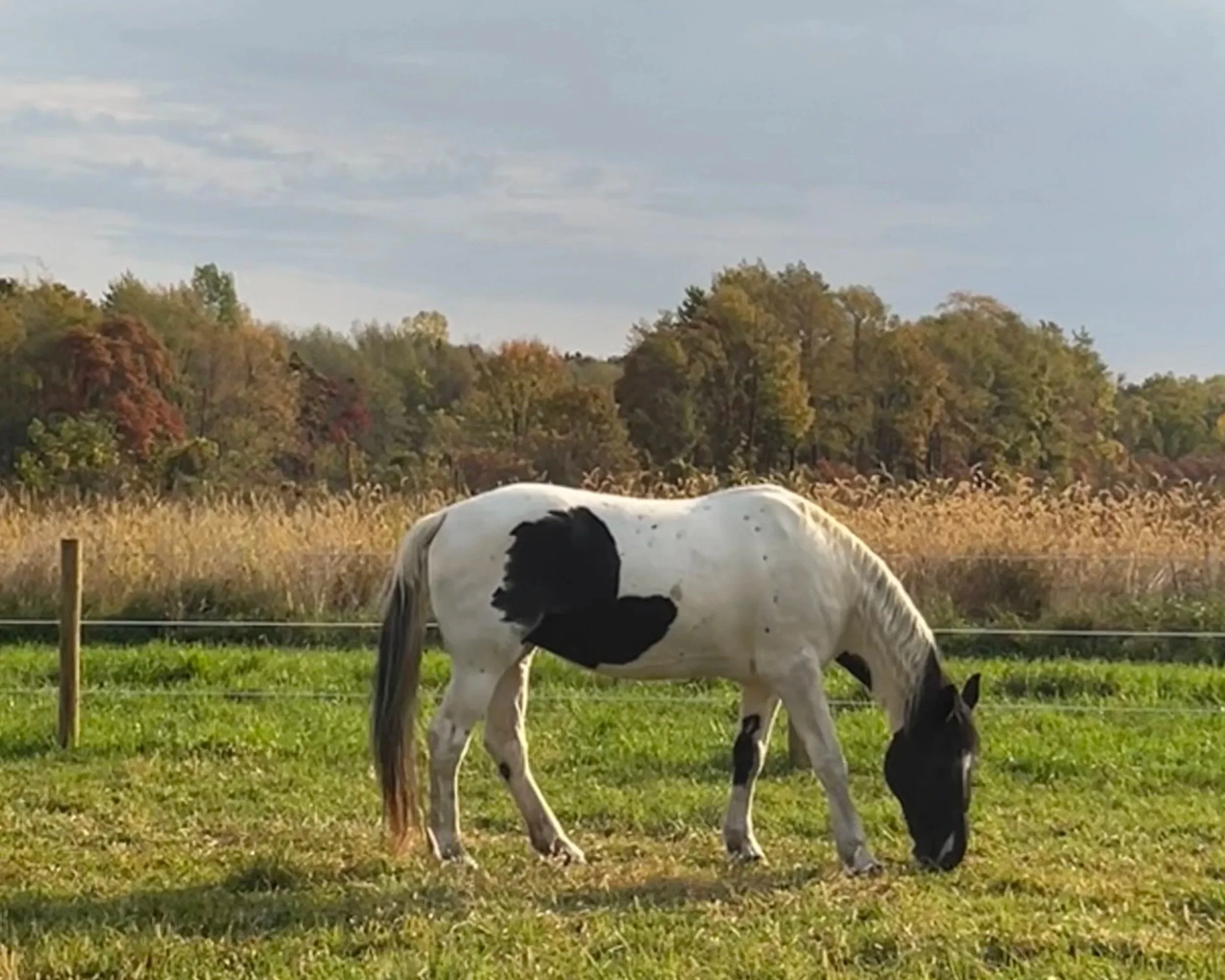
This week, Maya and I shared a ride that reminded me of why I approach both horsemanship and therapy through a trauma-informed, relationship-based lens. The work is not about keeping everything calm or under control. Instead, it’s about staying in conversation, honoring the full range of responses, and letting the nervous system move as it needs to—within safe limits. It would also be good to note that Maya is a rescue horse that has a pretty significant trauma history and we are just starting our riding relationship.
Beginning with Mutual Readiness
We started at the mounting block, not with the goal of “getting on” but with the question: Are we ready together? I brushed her, set the saddle pad, and saddled slowly, always checking for her signals.
When her attention drifted or her body tensed, we didn’t push through. We paused. We oriented. We let the moment be what it was. This is the same process I bring into Equine-Facilitated Psychotherapy and retreats: readiness is a shared agreement, not an expectation.
Riding as Dialogue
When I mounted, it was only after she offered stillness with her attention on me. From there, I invited her into walk, turn, and halt, but I also allowed space for her choices: to graze, to pause, to check in with her herd.
The ride became a dialogue rather than a performance. This is what I hope participants experience in EFP: that healing doesn’t mean suppressing impulses or emotions, but staying in connection while allowing them to unfold.
Following Emotional Responses Together
Midway through, a rustle in the treeline startled her. She surged forward, neck high, body on alert. My own body startled too. Instead of restraining either of us, I chose to stay with her. We moved through the big trot, I rubbed her neck, breathed, and stayed in conversation with her body.
This is not about “bringing her back to calm.” It’s about showing her that her response is allowed, that mine is too, and that together we can keep relating through it. In therapy, we often do the same: allowing fear, grief, or activation to be present without rushing to shut it down.
The Deeper Lesson
What happened with Maya is a living example of what healing can look like:
Consent and readiness matter more than agenda.
Responses—big or small—are welcome when held in safe connection.
Relationship is built through dialogue, not domination.
When I ride or when I facilitate EFP, the goal is never to eliminate emotion or create an image of control. It’s to trust the relationship enough to allow what arises, to move with it, and to find our way together.
Gratitude for the Herd
As the ride ended, Maya stood soft and grounded in her own way, and I felt grateful. She had taught me again that healing is not about calmness, but about the freedom to respond and the trust that we will remain in relationship through it.
✨ At our retreats and in EFP sessions, these everyday experiences with the herd become metaphors for our own healing journeys. The horses invite us to honor our natural responses, stay in conversation, and discover that connection can hold all of who we are.